Launch offer — valid today only

📄 Digital book in PDF · read it on your phone or print it

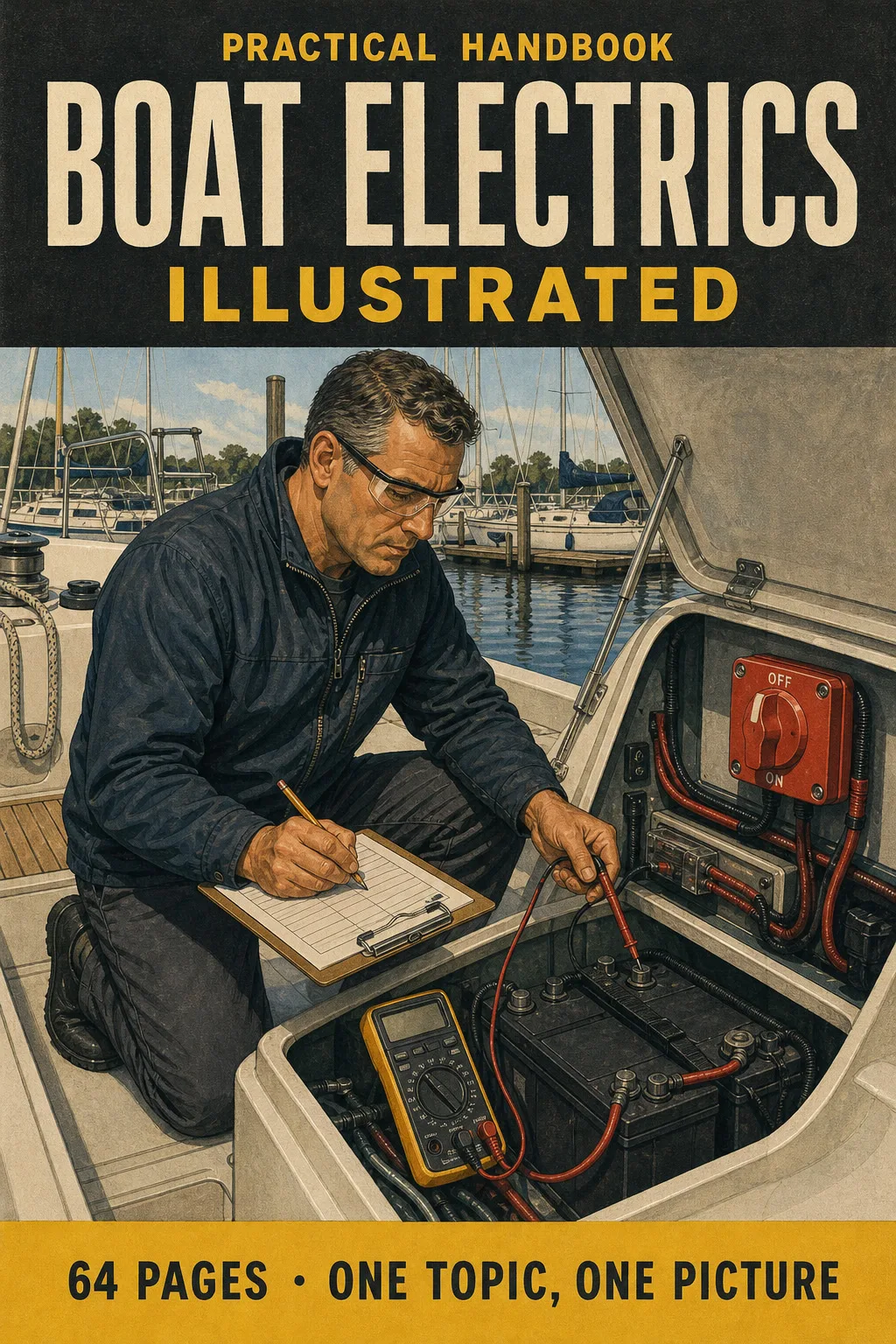
Your Boat's 12 V and 24 V DC System in Drawings One Circuit on Every Page

Battery banks, wire size and voltage drop, fuses and breakers, crimping, charging, nav lights and the multimeter tests that show why the house battery is dead in the morning. AWG sizes as sold in Canada, worked examples in metric. Each topic gets its own page: the drawing first, then what you need to remember. 64 illustrated pages.

SEE MY BOAT'S 12 V SYSTEM, DRAWN

🔒 Secure checkout · PDF by email · 30-day guarantee

Every topic, its own pageEvery circuit drawn in the same order, with the explanation beside it
64 illustrated pages9 parts, from the same order every time to when to call a marine electrician
Up-to-date sourcesTransport Canada TP 1332, ABYC E-11 and ISO 10133
PDF by emailFormat

Look Inside the Book

Each page has one large drawing and a box with the numbers and steps you need to know:

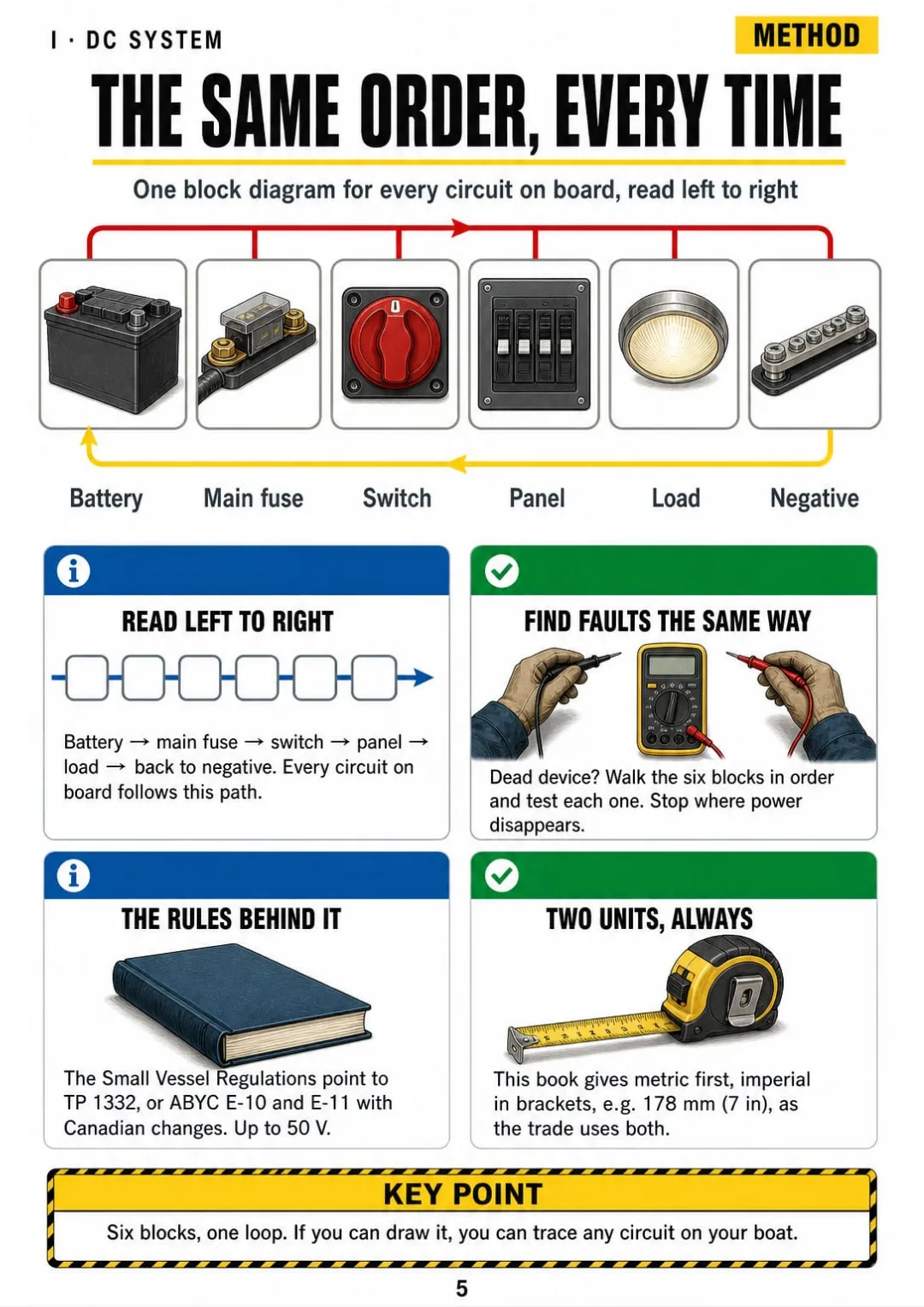
Battery → main fuse → switch → panel → load → negative: the one diagram the whole book uses.
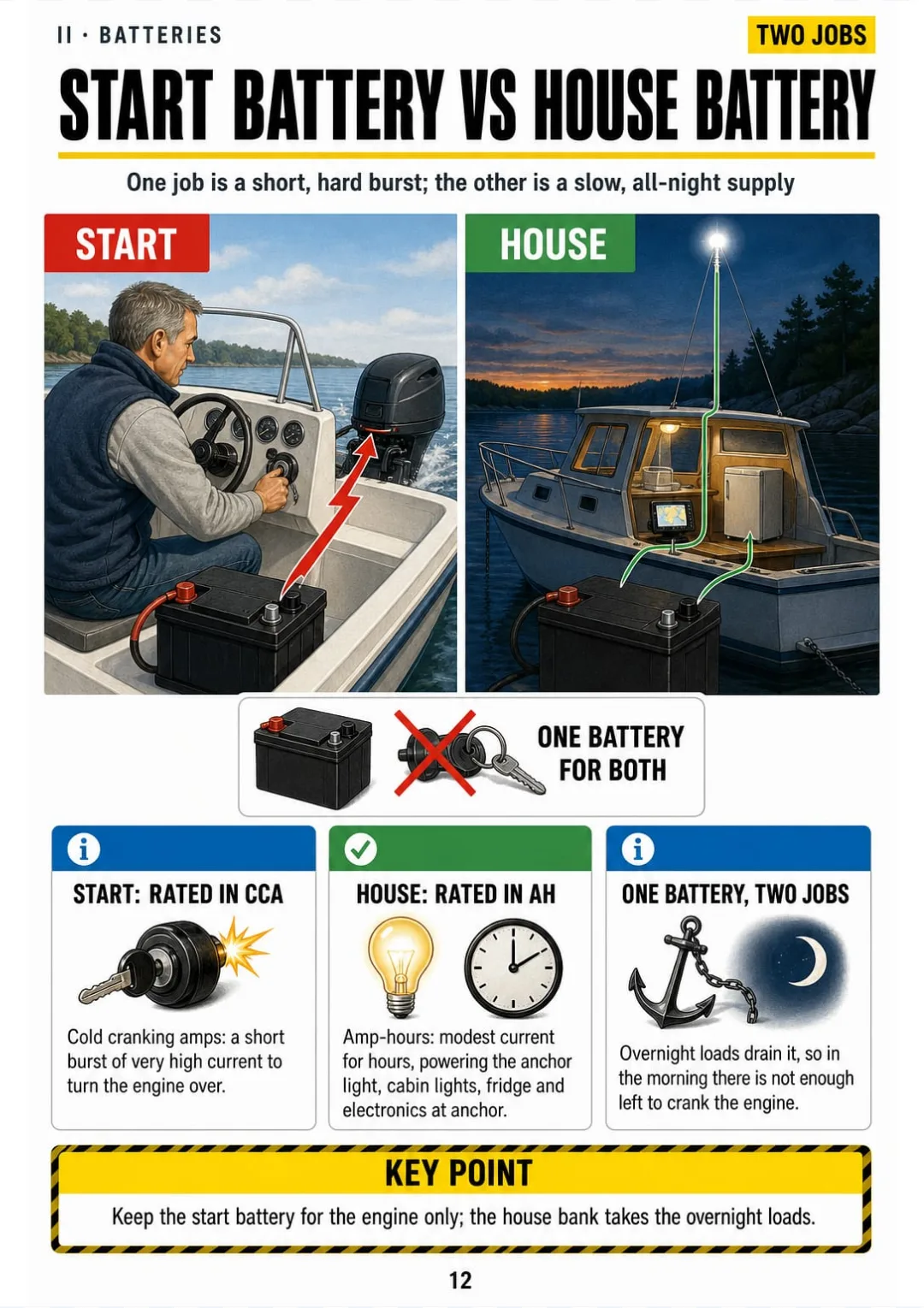
Start battery = short burst (CCA); house battery = steady hours (Ah).
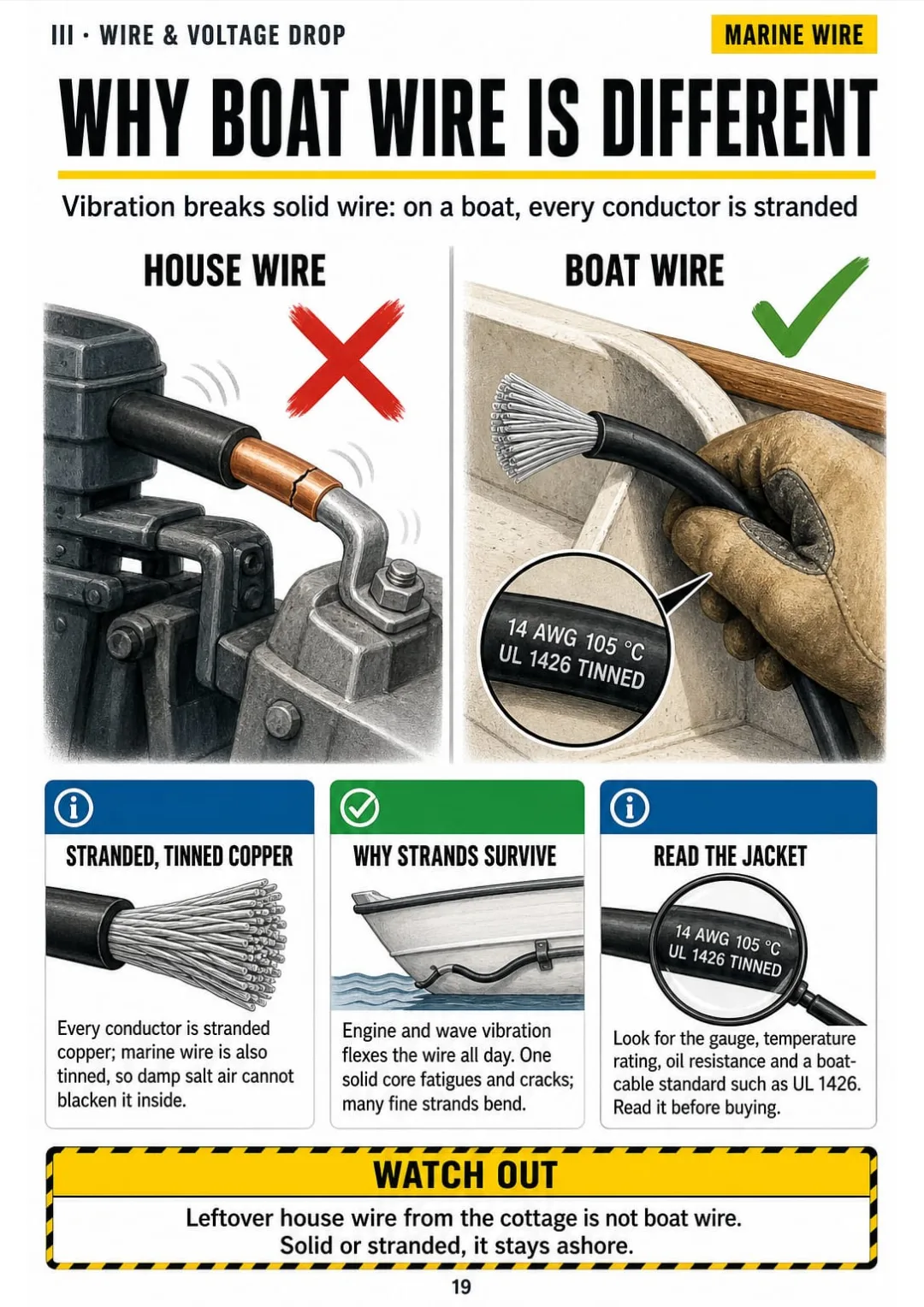
Stranded marine copper vs solid house wire, and how to read the jacket printing
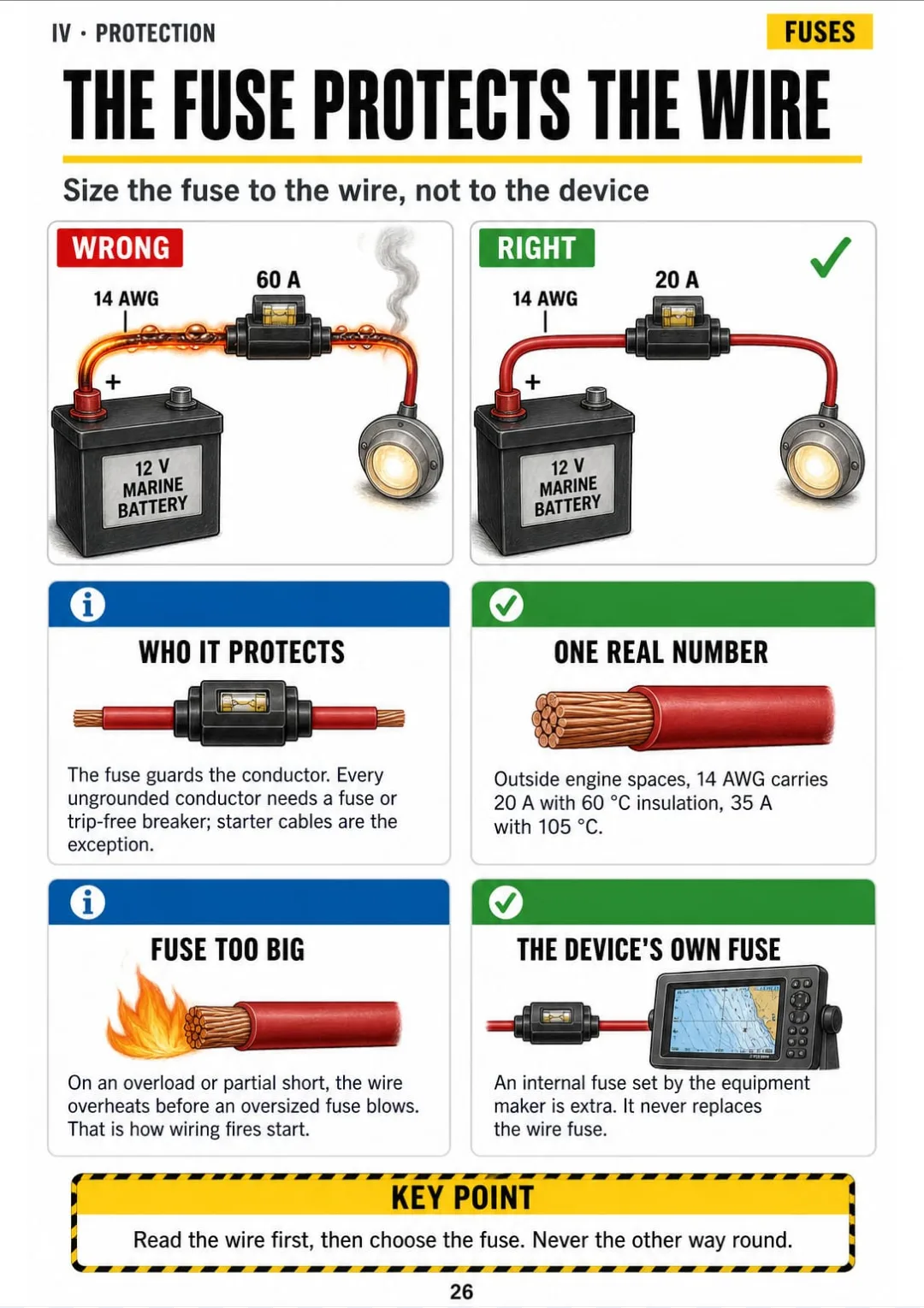
14 AWG outside engine spaces: 20 A at 60 °C, 35 A at 105 °C. The fuse follows the wire.
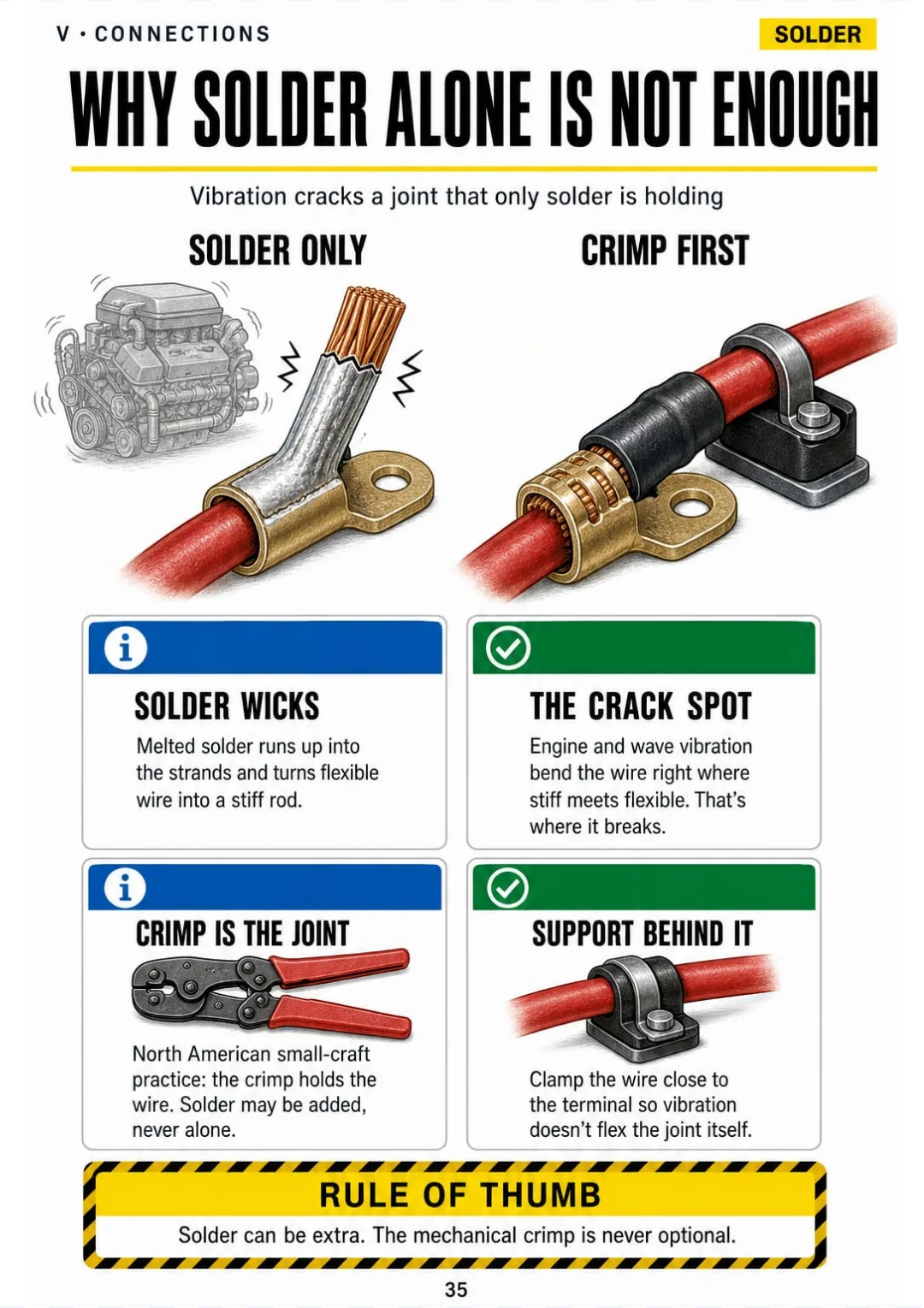
Solder makes a stiff point that cracks: crimp first, then support the wire
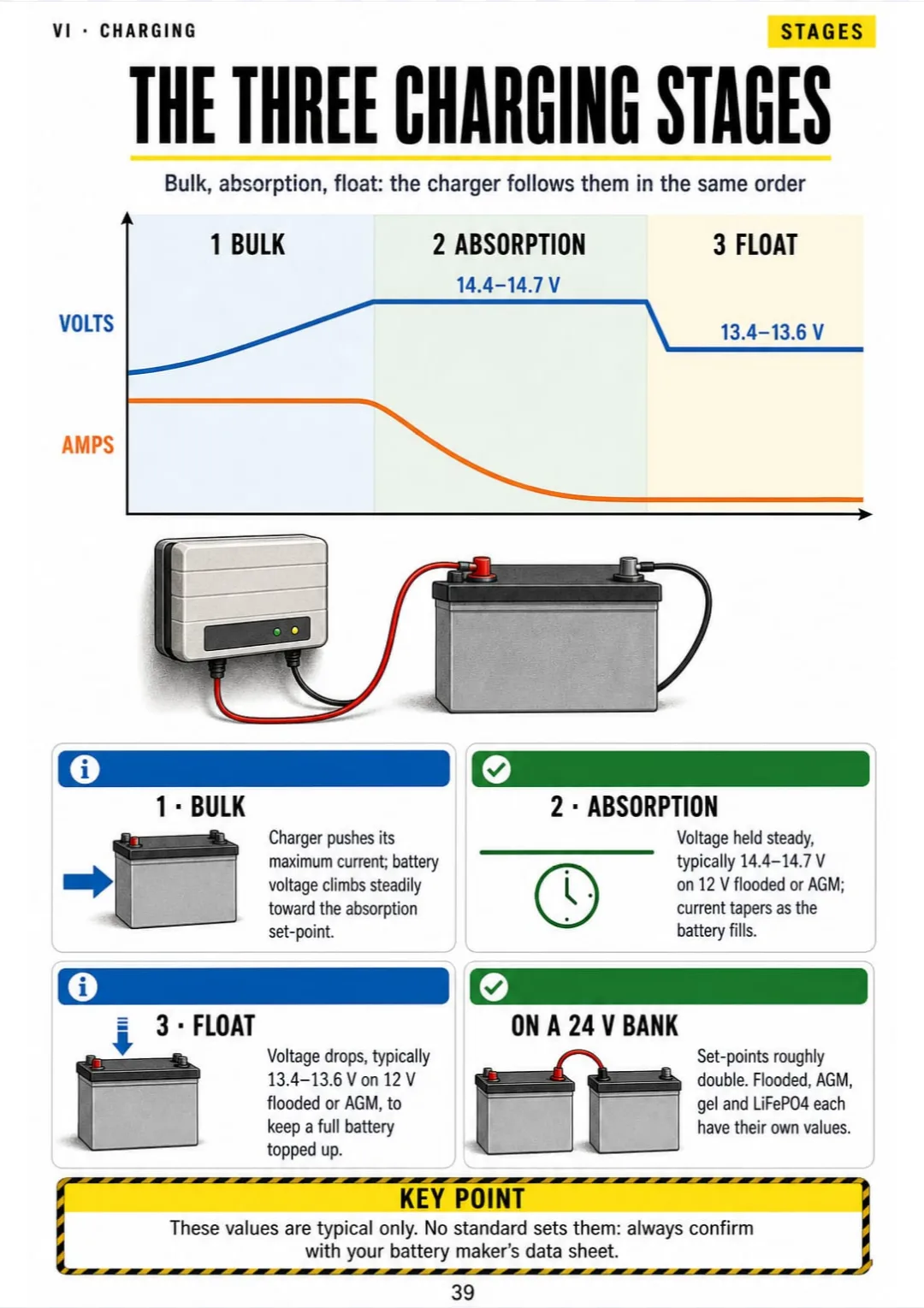
Bulk → absorption (typ. 14.4–14.7 V) → float (typ. 13.4–13.6 V) on a 12 V lead-acid battery
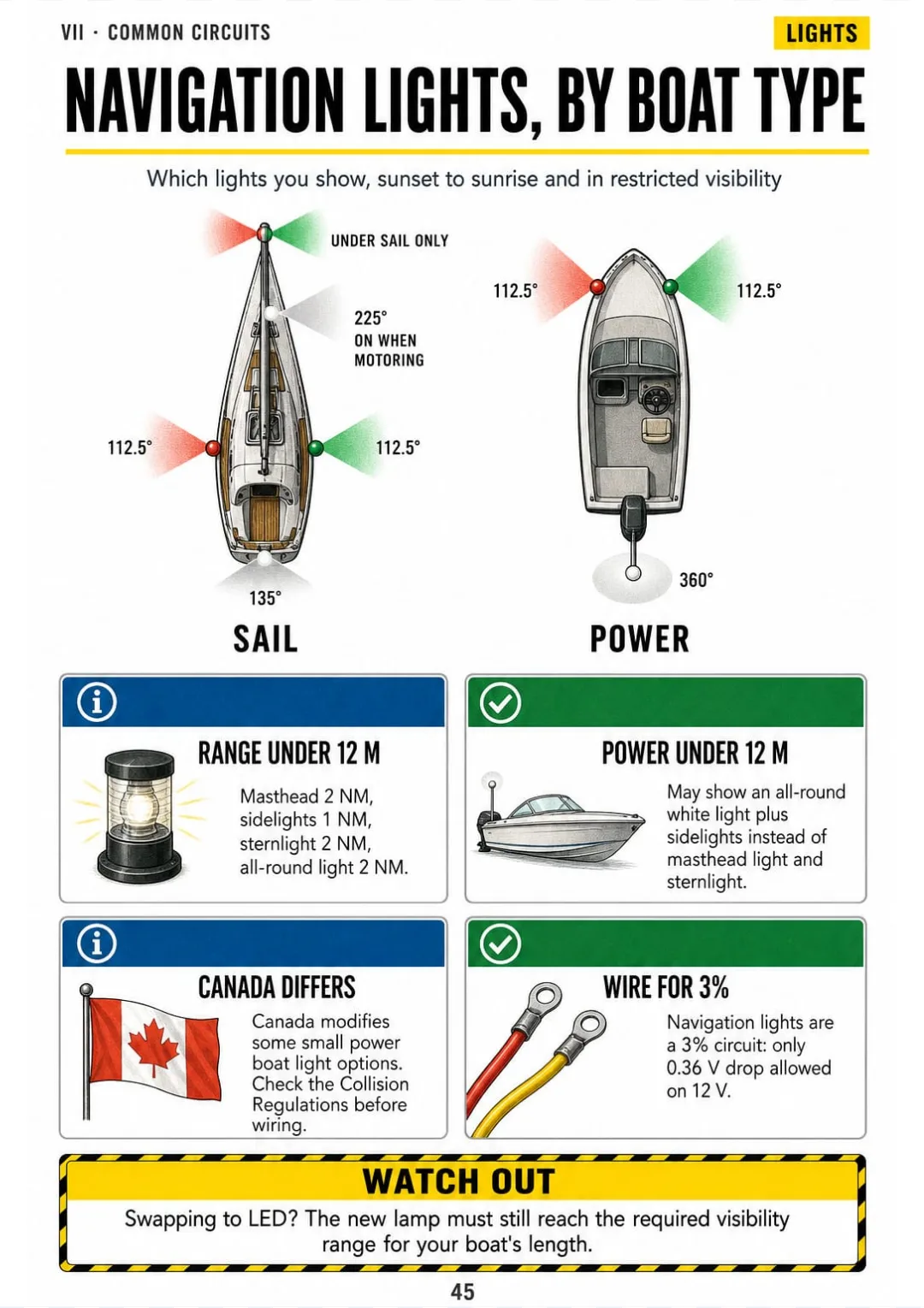
Under 12 m: masthead 2 NM, sidelights 1 NM, sternlight 2 NM, wired for 3% drop.
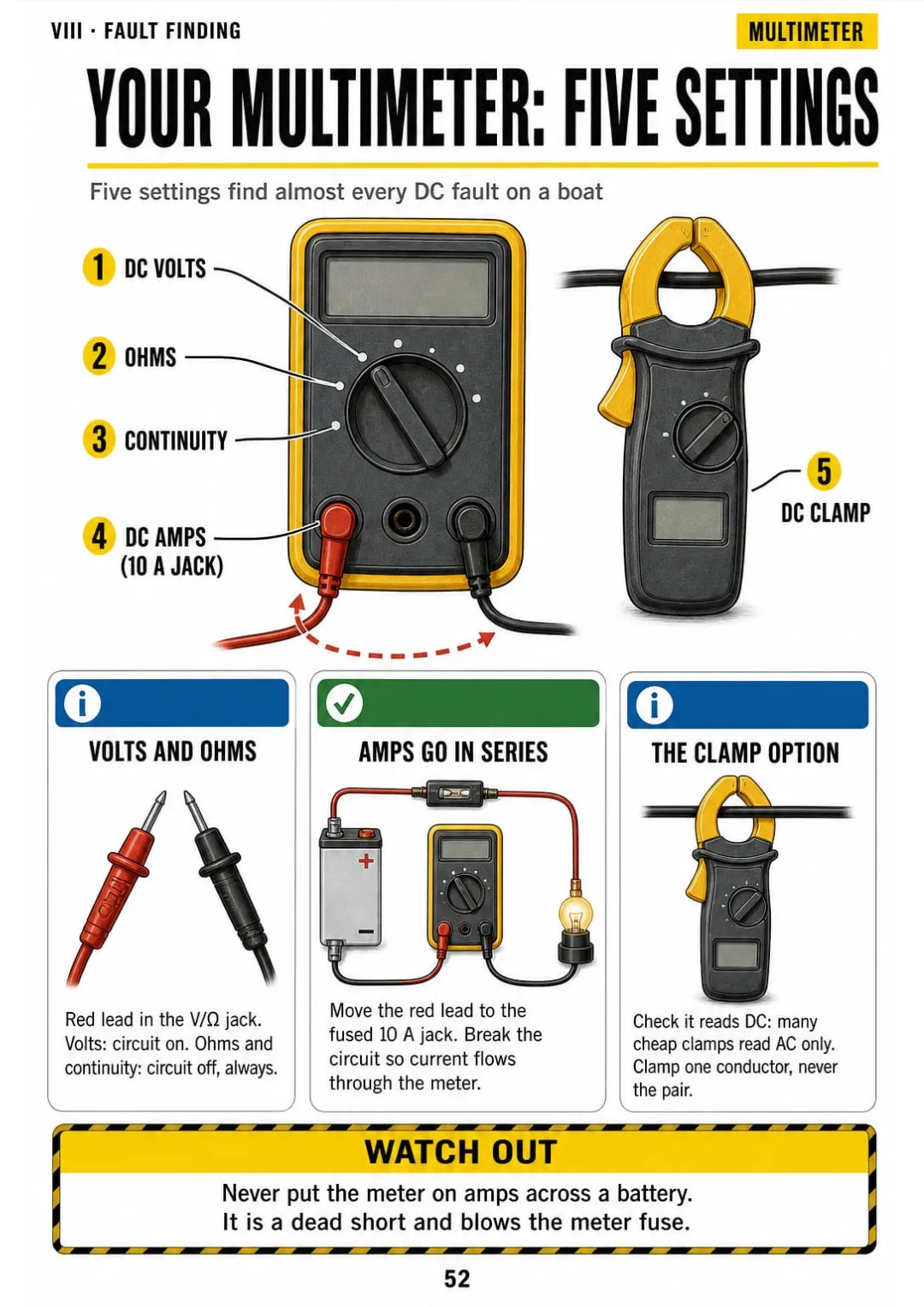
DC volts, ohms, continuity, 10 A amps and a DC clamp: where the probes go for each.

Swipe to see more →

These are real pages from the book. The table of contents is the full one: 9 parts and 60 topics.

The Problem Isn't You. It's How It Was Explained.

You're kneeling behind the panel of the boat you bought last fall, and the run to the bilge pump is stiff, solid copper, the kind used in a house. The previous owner left no diagram.

You look it up. The manual spends three paragraphs on strand classes, insulation ratings and vibration, and you still don't know if that wire has to go.

Stranded marine copper vs solid house wire, and how to read the jacket printing

In Boat Electrics Illustrated it's one page: a stranded marine conductor and a solid house wire drawn side by side, plus the jacket printing with every marking called out.

The same goes for the rest: AWG sizes, the round-trip length, the fuse that protects the wire, crimping and the three charging stages, each on its own page.

You see why the wire matters, you know what to buy at the chandlery, and you replace that run without going back to the manual.

COMPARE FOR YOURSELF

The Same Topic, Two Ways to Learn It

THIS
  • The manual: line after line
  • Battery types explained only in words
  • You get to the boat still unsure
Marine lead-acid batteries are classified according to their intended duty cycle. Starting batteries employ a greater number of thinner plates to maximize active surface area, enabling high current delivery over short intervals, a capability expressed as cold cranking amperes (CCA), defined as the current sustainable for 30 seconds at −18 °C while maintaining a terminal voltage of at least 7.2 V. Deep-cycle house batteries, conversely, employ thicker plates and are rated in ampere-hours, typically at the 20-hour discharge rate, reflecting sustained low-current delivery.
FOR THIS
  • Start vs house battery in one drawing
  • CCA and amp-hours in a box
  • You see it and you get it
Start battery = short burst (CCA); house battery = steady hours (Ah).
CONTENTS

Take a Look at the 9 Parts and 60 Topics

How the DC system works, batteries, wire and voltage drop, protection, connections, charging, common circuits, multimeter tests and season checklists: 64 pages, all illustrated.

IHow the DC System Works · pp. 5-11
  1. The Same Order, Every Time
  2. Volts, Amps and Ohms with a Water Hose
  3. Watts and Amp-Hours: What the Battery Really Pays
  4. The Negative Side Is Half the Circuit
  5. 12 V or 24 V: Why Some Boats Double Up
  6. Reading Your Boat's Panel
  7. AC vs DC on Board: Where This Book Stops
IIBatteries and Battery Banks · pp. 12-18
  1. Start Battery vs House Battery
  2. Flooded, AGM, Gel or Lithium (LiFePO4)
  3. State of Charge from the Voltmeter
  4. Batteries in Series
  5. Batteries in Parallel
  6. Sizing the House Bank
  7. Mounting and Venting Batteries Safely
IIIWire, Wire Size and Voltage Drop · pp. 19-25
  1. Why Boat Wire Is Different
  2. AWG: The Smaller the Number, the Thicker the Wire
  3. Measure the Round Trip, Not One Way
  4. 3% or 10%: Which Circuits Need Thick Wire
  5. Sizing a Wire, Step by Step
  6. Ampacity: When Heat Decides, Not Distance
  7. Wire Colours on a North American Boat
IVProtection: Switches, Fuses and Breakers · pp. 26-32
  1. The Fuse Protects the Wire, Not the Gadget
  2. Where the Fuse Goes: Close to the Battery
  3. Choosing the Fuse Rating
  4. Fuse Types on Board
  5. Circuit Breakers vs Fuses
  6. The Battery Switch (1-2-Both-Off)
  7. Circuits That Bypass the Main Switch
VConnections That Last · pp. 33-38
  1. Crimping, Step by Step
  2. Terminals and Heat-Shrink
  3. Why Solder Alone Is Not Enough
  4. Bus Bars and Terminal Blocks
  5. Routing and Supporting Wire
  6. Labelling Every Wire
VICharging the Batteries · pp. 39-44
  1. The Three Charging Stages
  2. The Engine Alternator
  3. Charging Two Banks from One Alternator
  4. The Shore Charger (DC Side Only)
  5. Adding a Solar Panel
  6. Battery Monitor and Shunt
VIICommon Circuits on Board · pp. 45-51
  1. Navigation Lights
  2. The Bilge Pump Circuit
  3. Adding a Sounder or Chartplotter
  4. Cabin Lights and USB Outlets
  5. The Starter Circuit
  6. Bonding vs DC Negative
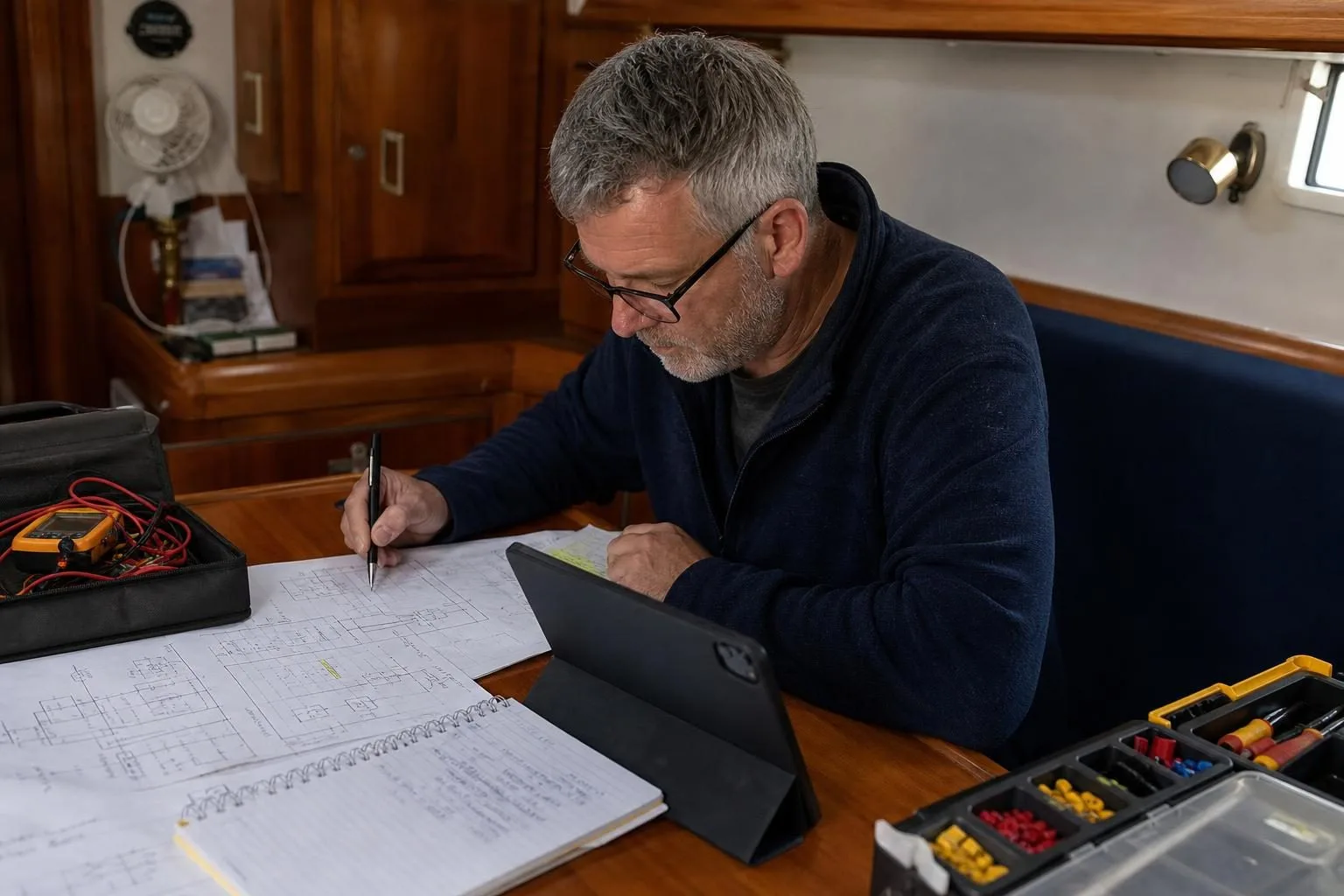
  7. Drawing Your Own Boat's Diagram
VIIIMultimeter Tests and Fault Finding · pp. 52-59
  1. Your Multimeter: Five Settings You Need
  2. Measuring Battery Voltage Properly
  3. The Voltage-Drop Test Under Load
  4. Testing Continuity and Fuses
  5. Finding What Drains the Battery Overnight
  6. Fault: Device Is Dead
  7. Fault: Lights Dim or Electronics Reset
  8. Fault: Batteries Never Seem Full
IXSeason Checklists and Frequent Mistakes · pp. 60-64
  1. Spring Launch Electrical Checklist
  2. Fall Haul-Out and Winter Storage
  3. Ten Frequent Wiring Mistakes on Used Boats
  4. Fire Warning Signs
  5. When to Call a Marine Electrician

One Page, One Topic, All Clear

Think of it this way:

It's launch weekend in May. The battery reads 12.6 V, but the bilge pump barely turns.

You open the page on the voltage-drop test under load: the meter drawn at the battery, then at the pump, with the pump running, and you see where the volts go missing.

Solder makes a stiff point that cracks: crimp first, then support the wire

Same with series and parallel banks, fuse placement, crimping, navigation lights and the overnight drain: each one on its own page.

Boat Electrics Illustrated is 9 parts and 60 topics, all drawn, ending with the spring launch and fall haul-out checklists.

What you see drawn, you don't have to memorize.

What's Inside Boat Electrics Illustrated:

Ipp. 5-11

How the DC System Works

One order for every circuit, so no panel looks like a tangle again: battery to load and back to negative, volts, amps and ohms, watts and amp-hours, 12 V vs 24 V and where AC stops.

IIpp. 12-18

Batteries and Battery Banks

Start vs house batteries, flooded, AGM, gel and LiFePO4, state of charge, series and parallel, sizing the house bank, and safe mounting and venting.

IIIpp. 19-25

Wire, Wire Size and Voltage Drop

You size a wire yourself before buying it: marine wire, AWG with mm² equivalents, round-trip length, 3% and 10% drop, step-by-step sizing, ampacity and North American wire colours.

IVpp. 26-32

Protection: Switches, Fuses and Breakers

Why the fuse protects the wire, where it goes, choosing the rating, fuse types, breakers, the 1-2-Both-Off switch and circuits that bypass it.

Vpp. 33-38

Connections That Last

Crimping step by step, terminals and heat-shrink, why solder alone isn't enough, bus bars, routing and labelling every wire.

VIpp. 39-44

Charging the Batteries

The three charging stages, the alternator, charging two banks, the DC side of the shore charger, solar, and the battery monitor with shunt.

VIIpp. 45-51

Common Circuits on Board

Nav lights, the bilge pump, adding a sounder or chartplotter, cabin lights and USB, the starter circuit, bonding vs DC negative and your own diagram.

VIIIpp. 52-59

Multimeter Tests and Fault Finding

You find the fault instead of guessing: five multimeter settings, battery voltage, voltage drop under load, continuity, the overnight drain and three common faults traced step by step.

IXpp. 60-64

Season Checklists and Frequent Mistakes

Spring launch and fall haul-out checklists, ten frequent wiring mistakes on used boats, fire warning signs and when to call a marine electrician.

At the end of the book: Spring launch and fall haul-out checklists, ten frequent wiring mistakes on used boats and the fire warning signs.
Plus: 2 Free Books

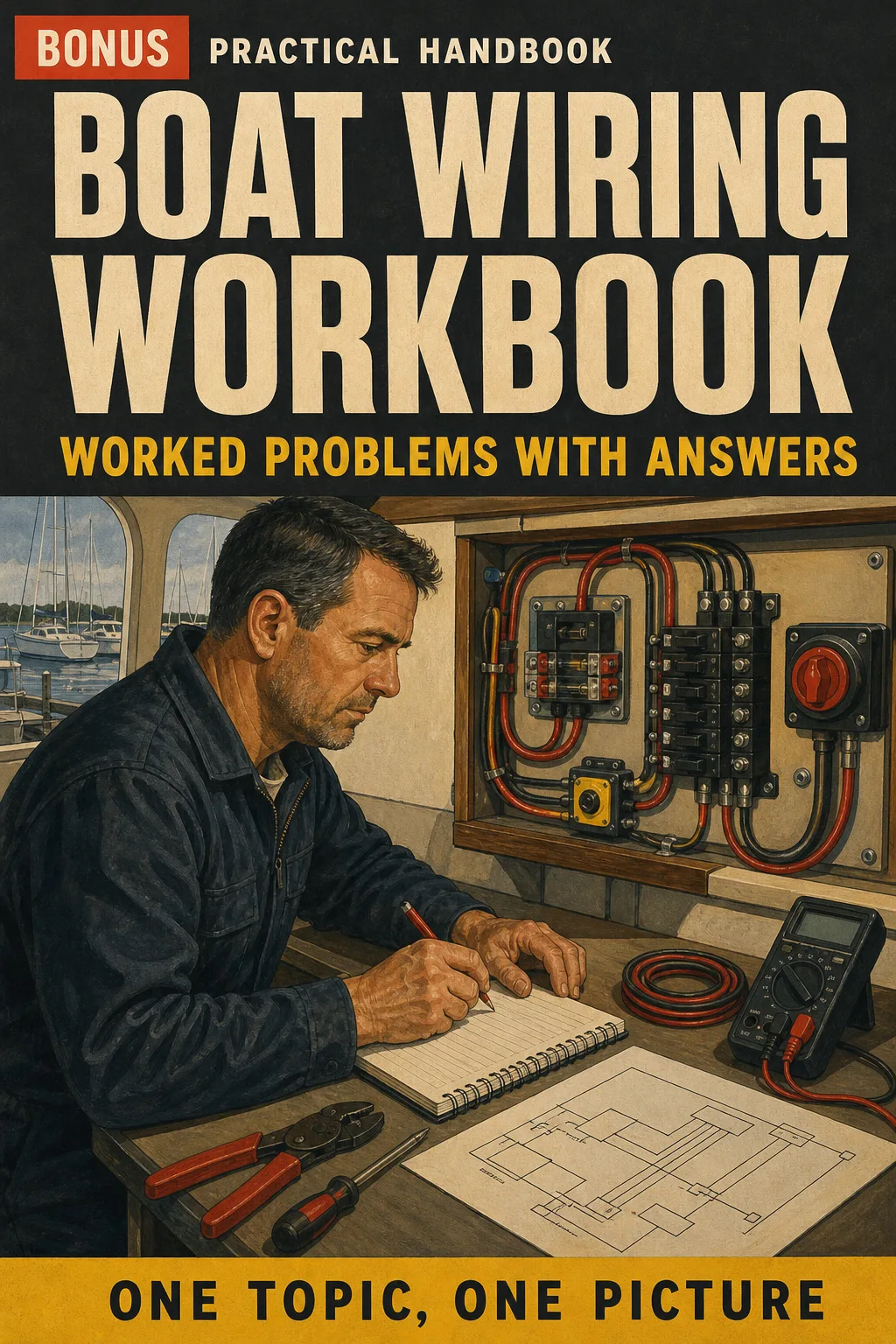
Boat Wiring Workbook: Worked Problems with Answers

BONUS 1: «Boat Wiring Workbook: Worked Problems with Answers»

Value on its own: US$ 17.90

Practise the numbers before you touch the boat: amp-hour budgets, voltage drop, wire size and fuse rating, each problem with a step-by-step answer.

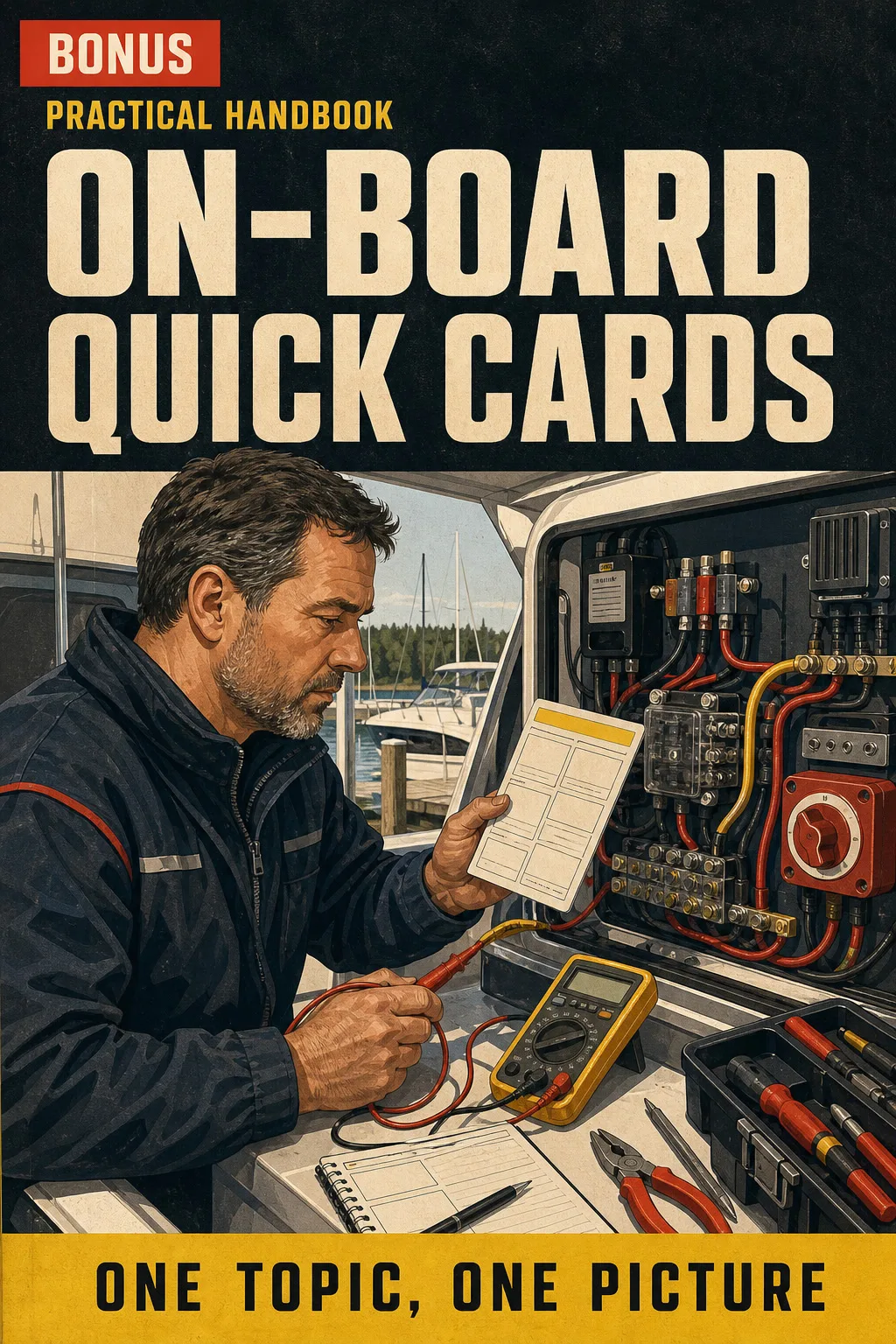
On-Board Quick Cards

BONUS 2: «On-Board Quick Cards»

Value on its own: US$ 14.90

Printable cards for the nav station: wire colour chart, fuse placement, wire-size steps and multimeter settings, so the key facts are there at a glance when you need them.

Boat Electrics Illustrated with 2 Free Books

  • Boat Electrics Illustrated: 64 illustrated pagesUS$ 63
  • BONUS 1: Boat Wiring Workbook: Worked Problems with AnswersUS$ 17.90
  • BONUS 2: On-Board Quick CardsUS$ 14.90
  • High-resolution PDF to printIncluded
Total value US$ 95.80
YOUR PRICE:
US$ 27
You save US$ 68.80
YES, I WANT BOAT ELECTRICS ILLUSTRATED FOR US$ 27

📄 This is a digital PDF book sent to your email: nothing is printed or shipped.

Secure purchaseEncrypted payment30-day guarantee

PDF by email: We email you Boat Electrics Illustrated as a PDF, together with the two free books. It's a single payment: no installments, no extra charges.

Who This Book Is For

You look after your own boat

You look after your own boat

You finally see the whole 12 V system in one order, from the battery to the last load, and you add a sounder or a solar panel knowing which wire and which fuse.

Launch day is coming

Launch day is coming

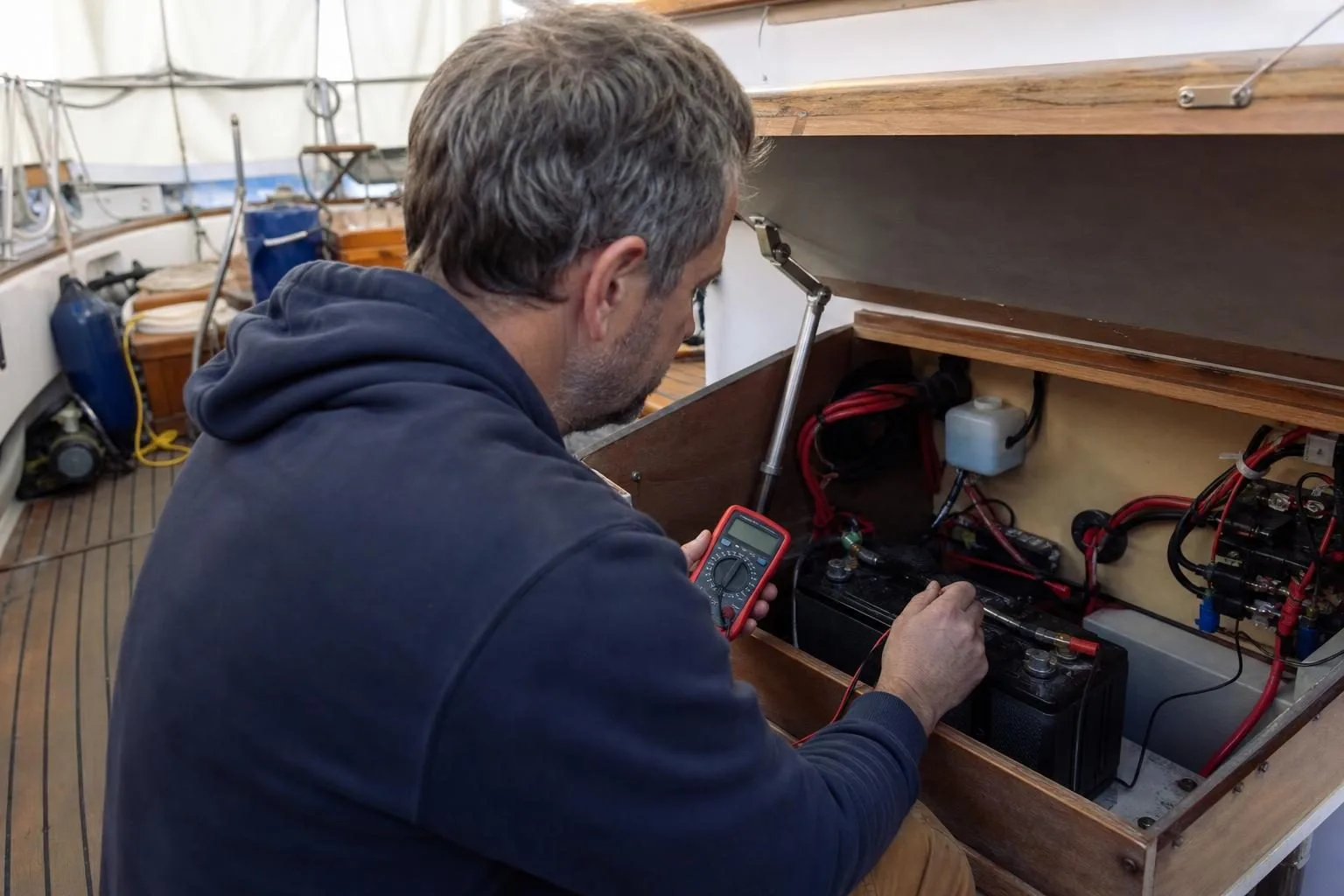
Before the boat goes back in, you test the batteries, the bilge pump and the nav lights with the multimeter, page by page, without waiting for a free slot at the marina.

You already work at a marina

You already work at a marina

Every boat comes in with someone else's wiring. You read each panel in the same order and keep the quick cards at the bench.

Everything You Get Today

US$ 95.80US$ 27
YES, I WANT BOAT ELECTRICS ILLUSTRATED FOR US$ 27

📄 This is a digital PDF book sent to your email: nothing is printed or shipped.

30DAYS
GUARANTEE

30-Day Guarantee

Try Boat Electrics Illustrated for 30 days, bonus books included.

We refund everything if the file won't open, if the book isn't what you see here, if you were charged twice or if the email doesn't arrive. Just email us.

You pay once. No subscriptions.

Frequently Asked Questions

Is it for me if I've changed batteries and fuses but I'm not an electrician?

Yes. It starts from the order every circuit follows and builds up to sizing wire, choosing fuses and fault finding. It covers North American 12 V / 24 V DC systems, not European 230 V wiring. Worked examples are in metric, with AWG wire sizes as sold in Canada and their mm² equivalents.

Where does the content come from?

From Transport Canada's Construction Standards for Small Vessels (TP 1332), the North American small-craft DC practice it refers to (ABYC E-11), ISO 10133 and the Collision Regulations for navigation lights. The drawings and examples are our own; no tables or text are reproduced.

Is this official material?

No. It's an independent illustrated guide. It is not affiliated with, approved or endorsed by Transport Canada, ABYC, ISO or CSA.

Does it replace a course or a marine electrician?

No. It helps you understand, wire and test the 12 V / 24 V DC side. Shore power (120 V / 240 V) and anything you're not sure about belong to a qualified marine electrician, and your insurer may have its own requirements.

Are the practice problems from an official exam? Do I get a certificate?

No. The worked problems are written for this book, to practise the numbers before you touch the boat. It's a study and reference book: it doesn't come with a certificate or qualification.

When and how do I get it?

The book and the 2 bonuses arrive as PDFs by email, at the address you enter at checkout.

Do I have to pay every month?

No. It's a one-time payment.

Can I have it on paper?

Yes. The PDF prints at home or at any print shop, so you can keep it at the nav station.

How does the refund work?

You have 30 days. We refund everything if the file won't open, if the book isn't what you see on this page, if you were charged twice or if the email doesn't arrive: just email us.

Before You Close This Page

No more rereading the same chapter and remembering none of it.

Wire size, fuse rating and voltage drop: you see them drawn.

You open the panel knowing where everything is.

Drawings make studying faster.

The book is right below.

One-time payment: US$ 27 · Guarantee: 30 days · PDF by email

YES, I WANT BOAT ELECTRICS ILLUSTRATED FOR US$ 27

📄 This is a digital PDF book sent to your email: nothing is printed or shipped.